
How to Find Your Interior Design Style (When You Have No Idea Where to Start)
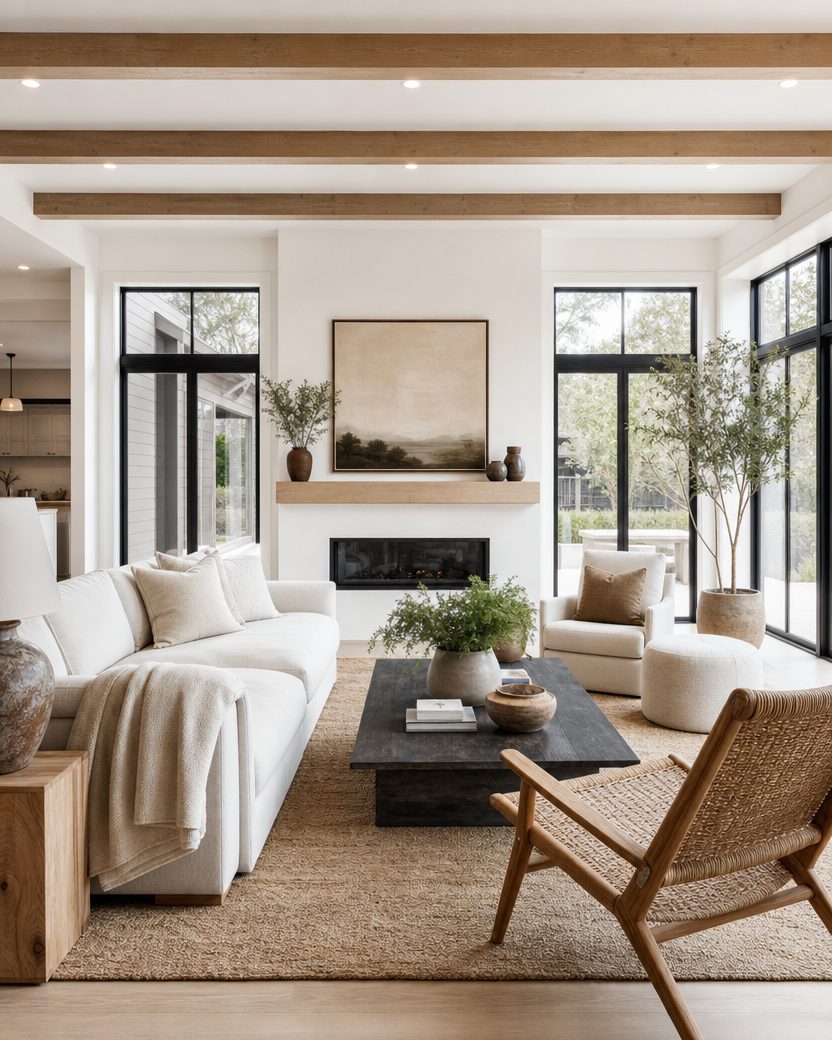
If someone asked you "what's your design style?" and you froze — you're in good company. Here's how to actually answer it.
Almost everyone who loves their home hits the same wall: you can tell when a room feels right, but you can't name why. You save a hundred photos and they somehow don't match. You buy a chair you loved in the store and it looks wrong at home. The problem isn't your taste — it's that no one ever gave you the vocabulary for it.
Why "what's my style?" is so hard to answer
Design styles overlap. A single room can be 60% one thing and 40% another. Most online quizzes force you into one of five tidy boxes, which is why the results never quite fit. Your style is more like a recipe than a label — a mix of a few ingredients in proportions specific to you.
Start with what you already gravitate toward
Open your saved photos and look for the through-lines:
- Color temperature: warm and earthy, or cool and crisp?
- Contrast: high-contrast and bold, or soft and tonal?
- Materials: natural wood and linen, or sleek metal and glass?
- Fullness: layered and collected, or minimal and calm?
- Line: curved and organic, or straight and architectural?
Five saved rooms is enough to see a pattern. You'll notice you keep choosing the same two or three answers — that's the start of your style profile.
A quick tour of the most common styles
- Modern Coastal — light, airy, natural textures; calm without the literal seashells.
- Scandinavian — minimal, functional, warm woods, lots of light.
- Modern Farmhouse — cozy and practical; rustic wood with clean lines.
- Mid-Century Modern — warm woods, tapered legs, confident retro shapes.
- Japandi — Japanese minimalism meets Scandinavian warmth.
You almost certainly aren't just one of these — and that's the point. Knowing your blend beats forcing a single label.
Turn the pattern into a plan
Once you can name your style, everything downstream gets easier: which paint colors to test, what to keep versus donate, how to shop without second-guessing. A defined style is a filter — it tells you what's a "yes" before you spend a dollar. From there you can choose a color palette for your home and make your whole home feel cohesive.
Your style isn't something you discover once and lock forever. It's yours to shape as your life and your home change.
The 2-minute version
Doing the audit by hand works — it just takes a while. Noma turns it into a short quiz: you react to real rooms, and it names your design style as a blend with percentages, then builds mood boards, palettes, and a room-by-room plan around it. It's a companion for the process, not a replacement for your eye — you still own the taste.
Not sure what your style is?
Take the free 2-minute quiz and find out. Then design every room around it.