
Traditional Colonial
Everything that defines Traditional Colonial — and how to know if it's your style.
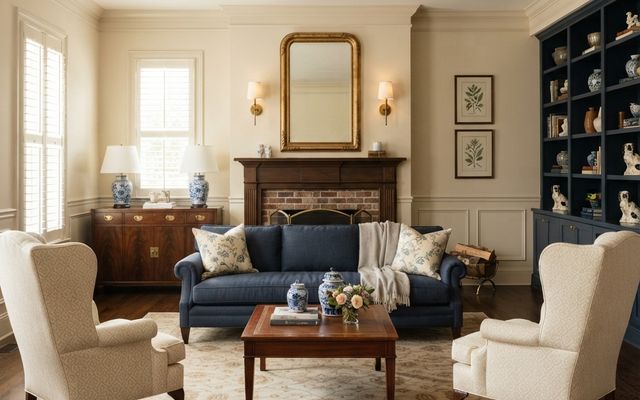
What Traditional Colonial is
Traditional Colonial blends timeless, symmetrical elegance with orderly, classic American symmetry. It's one of the 56 design styles Noma can match you to — and like most real homes, it's a blend, not a single label. Here's how to recognize it and bring it home.
The palette
Traditional Colonial leans on a calm and balanced palette — soft neutrals as the base, with the accent tones shown here. Keep it tonal and let texture do the work.
Materials & textures
Rich woods, tailored upholstery, and classic patterns, plus wood paneling, brass, and refined trim. Mixing a few natural materials is what gives Traditional Colonial its depth — aim for two or three that repeat through the room.
How to get the Traditional Colonial look
- Start with the base neutrals on walls and large furniture.
- Layer in the materials above so texture carries the room.
- Use the accent color sparingly — art, textiles, one hero piece.
- Keep the lines warm and characterful, and don't over-fill the space.
Is Traditional Colonial your style?
Maybe Traditional Colonial is a strong match — or maybe you're a blend of it and something else. Noma's free quiz reacts to real rooms and names your exact mix with percentages, then builds a palette and plan around it. You can also learn how to find your interior design style and how to choose a color palette.
Is your style Traditional Colonial?
Get NOMA and take the free 2-minute quiz to find your exact design style.